|
Having trouble reading this? View on the web
The following is a sponsored message. Health Union LLC does not endorse any specific product, service or treatment. |
|
Liz is a volunteer with the SHARE Network, a Johnson & Johnson program made up of people who are dedicated to inspiring others through their personal health journeys and stories of caring. Liz is a real patient and has been compensated by Johnson & Johnson for her time to develop this content. Liz's experience is unique and not representative of all patients. |
|
My mantra now is:
“Fight Like a Girl.’’
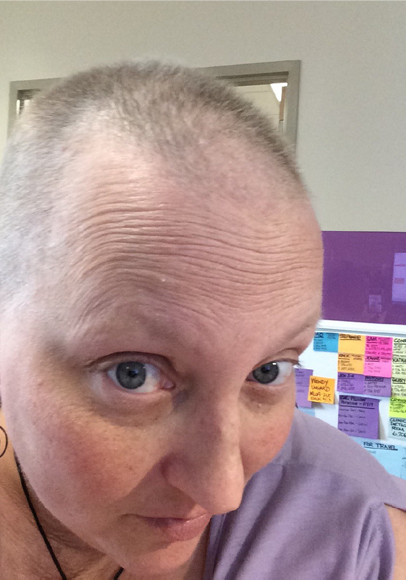
However, I wasn’t always quite this sassy. It wasn’t until I was diagnosed with bladder cancer that I realized how much fight I had in me. Years before my diagnosis, I was passive. I didn’t question or engage in the clinicians’ decision-making or diagnosis because I didn’t feel I had a say. I just listened as clinician after clinician ruled my frequent urination and pain as a urinary tract infection (UTI) or bladder infection or simply part of the aging process. I was given pain meds and sent on my way—back to my life working, volunteering, and staying busy.
Then, in July 2016, just before my 41st birthday, I went to the emergency room—again. Finally, someone listened. A few weeks later, I had my answer. A tumor the size of a grapefruit was living inside my bladder, blocking my left kidney, and had spread through the muscle wall and into the cervix.
I was not able to receive the standard bladder treatment, known as BCG (short for Bacillus Calmette-Guérin),1 so a month and a half later, I underwent a radical cystectomy (bladder removal),2 and a hysterectomy. Then I had an ileal conduit placement, better known as a urostomy—I now have a permanent pouch on the outside of my body to collect my urine. Later, I began chemotherapy.
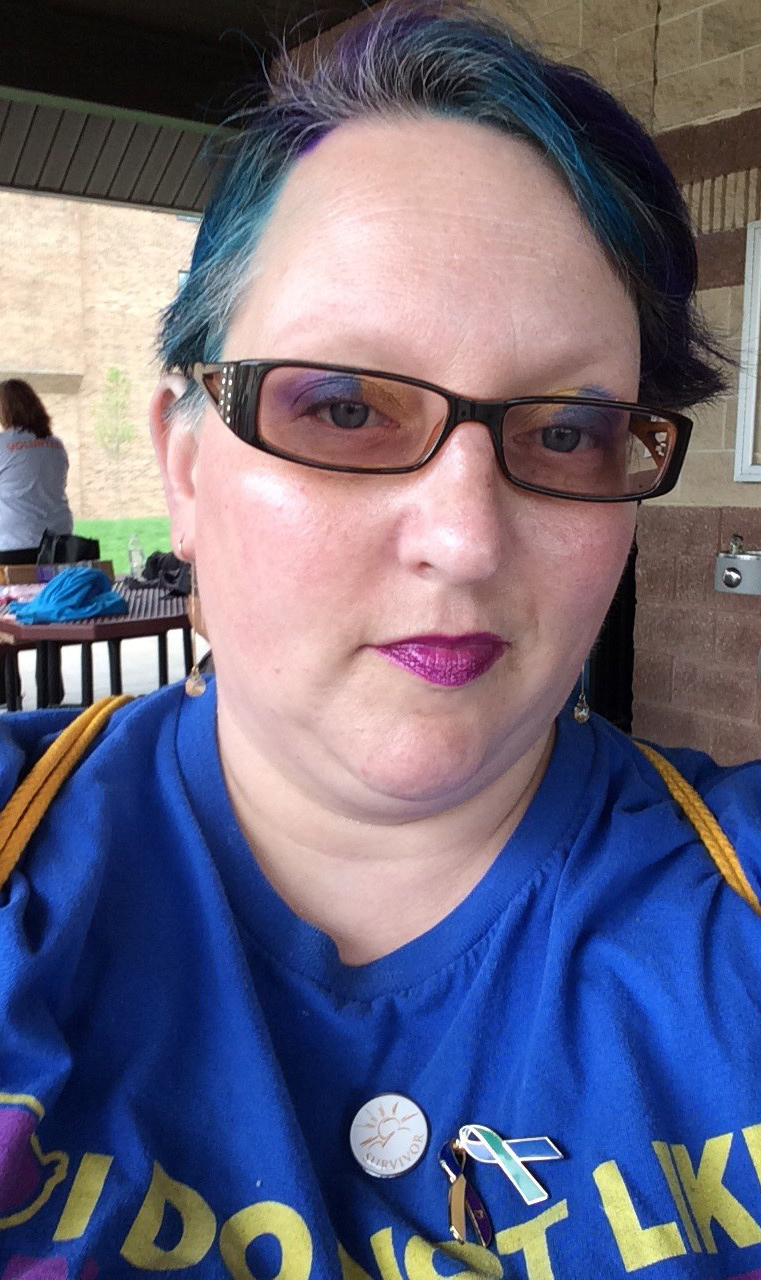
That was eight years ago. Today, I stand as a survivor but, more importantly, as an advocate. I take the time to talk with others within bladder cancer communities, reassuring them that a diagnosis isn’t the end, nor does it always mean bladder removal surgery. My work with the Greater Cincinnati Ostomy Association and as a contributing writer for several national organizations like BladderCancer.net is about more than just raising awareness. It’s about empowering others to find their voice and to take control of their journey.
I’m using my journey to boldly speak up for those who can’t for themselves. |
|
|
I fight because:
While females may be diagnosed with bladder cancer less often than males,
they typically present with more advanced disease and have a poorer prognosis.3
Many times, females may ignore the most basic symptom–blood in the urine that can be mistaken as a UTI or gynecological issues.4 This can lead to delays in diagnosis.
Also: |
|

|
While the incidence of bladder cancer is higher in older people and the risk is higher for males, it still impacts females.5 |
|

|
Healthcare providers may assume symptoms such as blood in urine are likely caused by a UTI rather than bladder cancer, as this is most often the case.6 |
|
|
Changing the bladder cancer treatment landscape.
Everyone’s journey is different. The standard of care in certain kinds of bladder cancer hasn’t significantly changed in 40 years.1 There are clinical trials that are investigating what could be new treatment options for patients, which are long overdue for this community.7
We need to advocate for ourselves:
|

|
You are your best advocate. If something doesn’t feel right, don’t hesitate to speak up or ask for a second opinion. |
|

|
Ask questions and seek answers. The more you know, the better you’ll be able to make informed decisions about your health. |
|

|
Sharing your story can also be very beneficial in your own healing from this life-changing diagnosis. Doing so will help others understand what you’ve been through and may pave the way for positive change in the treatment of bladder cancer. |
|

|
When seeking medical information on social media, it’s crucial to maintain a healthy skepticism. |
|
|
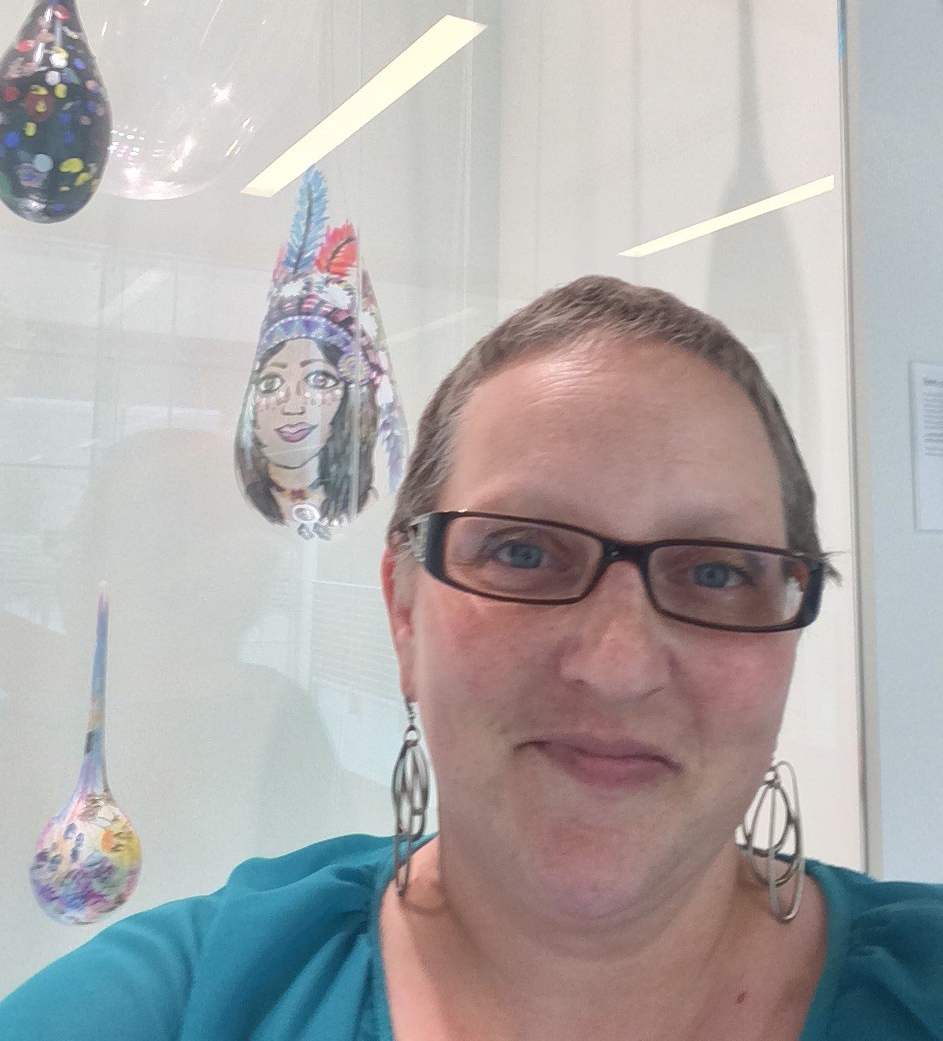
I’m proud of my journey and know I still have a lot of life left to live. I chronicle my journey on Instagram @mirletaliz and you can find out more about me on my Linktree. Follow me on social and share this email with a friend.
I partnered with Johnson & Johnson to share my story, raise awareness, and educate about bladder cancer. If you also have a story to share like mine, I hope you will consider joining the SHARE Network. |
|
|
1. |
Jiang S, Redelman-Sidi G. BCG in bladder cancer immunotherapy. Cancers (Basel).
2022;14(13):3073. Published 2022 Jun 23. doi:10.3390/cancers14133073 |
|
2. |
Aminoltejari K, Black PC. Radical cystectomy: a review of techniques, developments and controversies. Transl Androl Urol. 2020;9(6):3073-3081. doi:10.21037/tau.2020.03.23 |
|
3. |
Shu TD, Schumacher FR, Conroy B, et al. Disparities in cause-specific mortality by race and sex among bladder cancer patients from the SEER database. Cancer Causes Control. 2023 Jun;34(6):521-531. doi: 10.1007/s10552-023-01679-x. |
|
|
|
© Johnson & Johnson and its affiliates 2025 02/25 cp-481006v1 |
|
Please add sponsor@bladdercancer.net to your e-mail address to ensure our e-mails reach your inbox.
This e-mail was sent from BladderCancer.net, a property of Health Union, LLC, 1218 Chestnut Street, 3rd Floor, Philadelphia, PA 19107, United States.
This information is not designed to replace a physician's independent judgment about the appropriateness or risks of a procedure for a given patient. Always consult your doctor about your medical conditions. BladderCancer.net does not provide medical advice, diagnosis or treatment. Use of the site is conditional upon your acceptance of our terms of use.
Follow the link to opt out of future emails: Unsubscribe |
|
|